Enrolling nowOnline · Self-paced

Become a power distribution designer.

Go from no electrical background to designing underground and overhead power for homes and businesses — sizing transformers, checking voltage drop and flicker, laying out conduit, and drawing construction sketches. Practice every step in the 3D Design Simulator.

  • 12 weeksPer course
  • 1 hr / dayFive days a week
  • 3DDesign Simulator
  • $400Per course
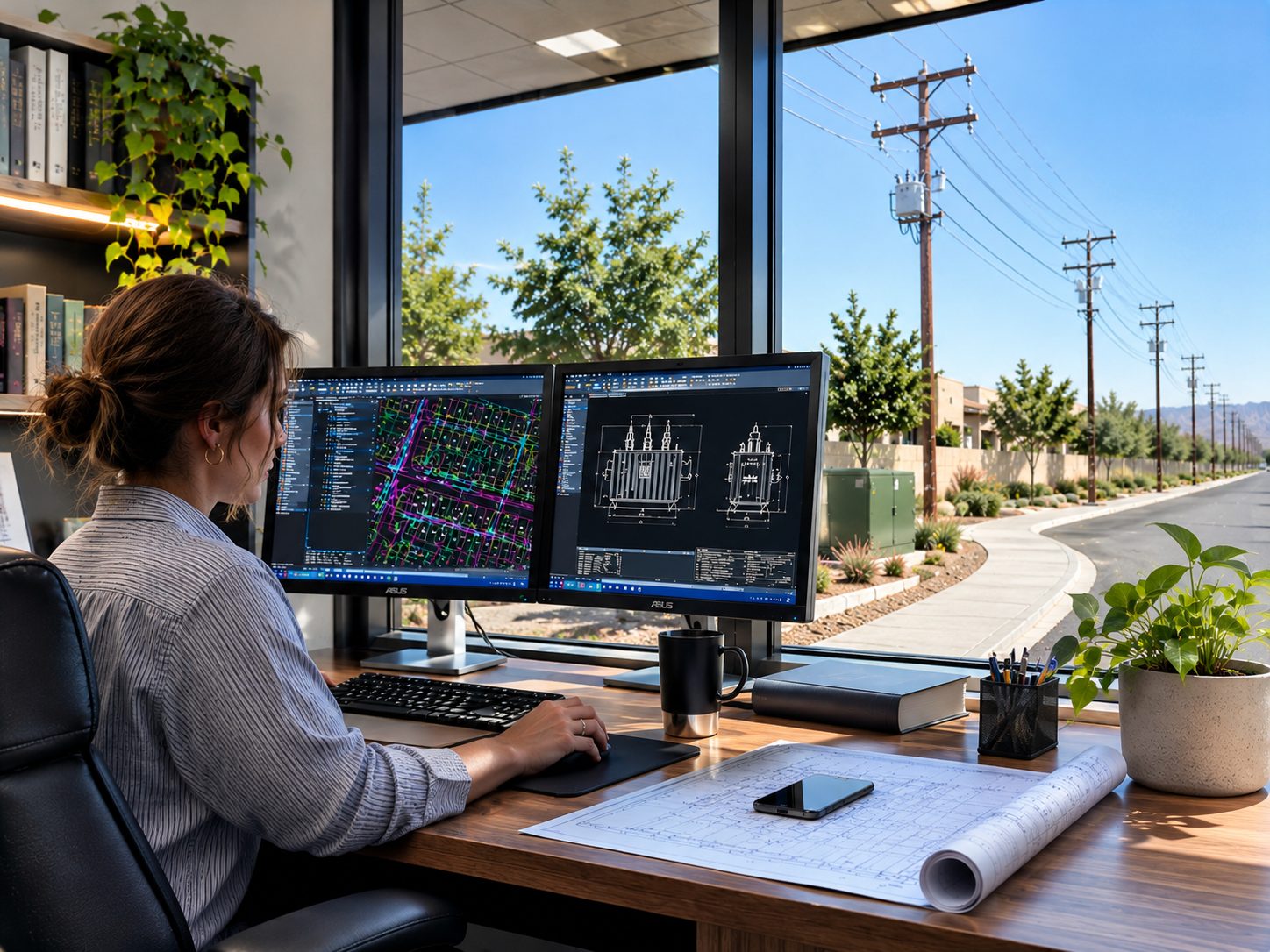
A distribution designer working on an underground layout and transformer drawings, with overhead power lines outside the office window

From a request for power to the lights coming on

Learn the career. Master design. Build with confidence.

  • 12weeks per course
  • 60lessons each
  • 2real projects

Career path

Every new home, business, and EV charger needs a distribution designer.

Designers turn a request for power into a buildable plan, working at utilities, engineering firms, and contractors.

  1. Learn the fundamentals
  2. Practice real design decisions
  3. Apply with confidence
How to become a power distribution designer →

3D design simulator

Practice in 3D before you design in the field.

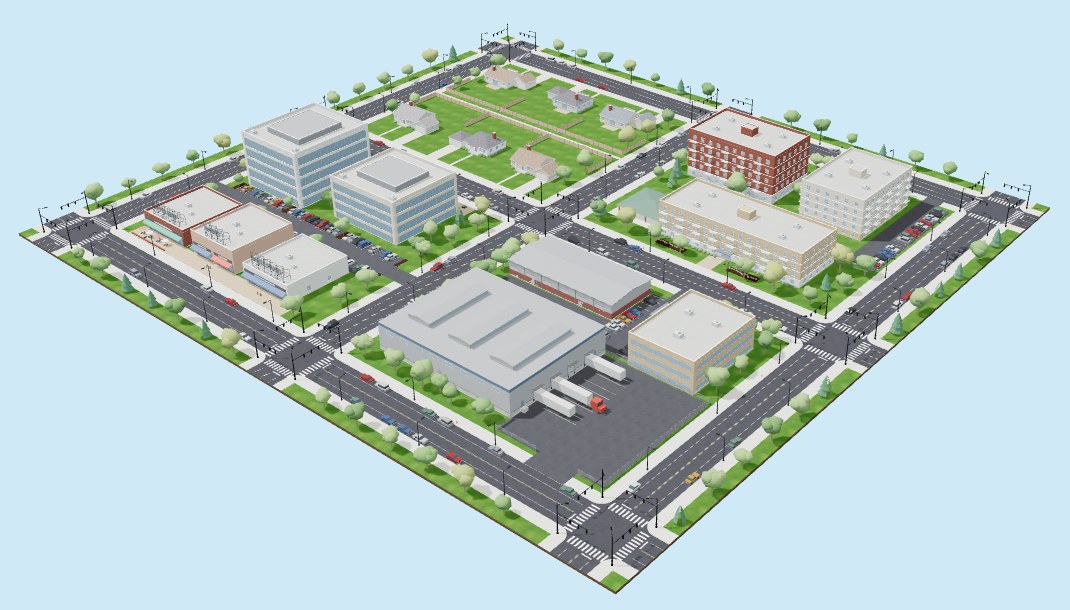
The 3D Design Simulator showing an underground design in a city block
  • Connectivity
  • Protection
  • Loading
  • Voltage drop

Build a complete system in a 3D neighborhood. Live checks catch mistakes safely, with no crews or energized lines at risk.

Take the interactive tour

Pricing

Choose your track

Track UG

Underground Design

$400 / year

Pay with Affirm: $33.33/mo*

  • Full Underground Distribution Design course
  • 3D design simulator access
  • Job readiness & interview support
  • Design tools & apps
  • UG Design Pocket Guide
  • Personal design notebook
  • 12 months of access
Enroll
Track OH

Overhead Design

$400 / year

Pay with Affirm: $33.33/mo*

  • Full Overhead Distribution Design course
  • 3D design simulator access
  • Job readiness & interview support
  • Design tools & apps
  • OH Design Pocket Guide
  • Personal design notebook
  • 12 months of access
Enroll
Teams

Custom Solutions

Training built around your standards, your equipment, and your people.

Contact for pricing

  • Custom training courses
  • Custom simulator
  • Custom tools & apps
  • Tailored to your specific needs
Contact us

*Illustrative 12-month payments assume 0% APR.

For utilities & contractors

Training built around the way your team designs.

Every utility has its own construction standards, equipment, naming, and design software. We build training that teaches your designers to do the work your way, from their first day.

Tell us about your standards, your typical jobs, and the people you're training. We'll scope a package, build it with your subject-matter experts, and set up your team. You invite employees, manage seats, and follow everyone's progress from one dashboard.

Talk to us about custom training
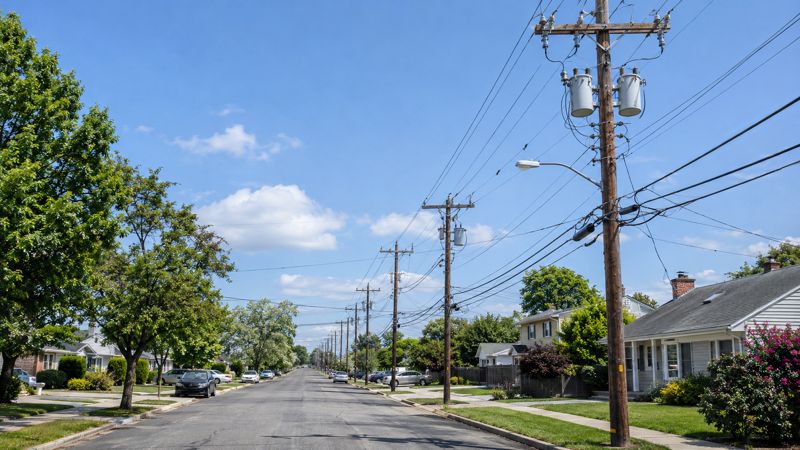
Overhead distribution lines over a neighborhood at dusk
CUSTOM SOLUTIONS · CONTACT FOR PRICING
Courses

Custom training courses

Lessons, worked examples, and projects rewritten around your construction standards, material lists, design criteria, and approval process, so new hires learn your way first.

Simulator

Custom simulator

Your equipment catalog, framing units, conductor and cable sizes, and design rules built into the 3D simulator, with scenarios modeled on the jobs your team actually designs.

Tools

Custom tools & apps

Calculators and checkers for voltage drop, flicker, cable pulls, sag, and guying, set to your utility's values, plus pocket guides and job aids branded for your team.

Your team

Tailored to your needs

Onboarding for new designers, cross-training between overhead and underground, or refreshers on new standards, with seats, reporting, and invoicing set up for your organization.

FAQ

Questions about becoming a distribution designer

What does a power distribution designer do?

A power distribution designer plans the overhead and underground facilities that carry electricity from substations to homes and businesses — poles, conductors, transformers, conduit, vaults, and service connections. Designers prepare the drawings, material lists, and work-order packages that line crews build from, while meeting utility standards and safety codes such as the NESC.

Do I need prior experience or an engineering degree?

No. The program starts with distribution system fundamentals and builds up to complete design packages. Comfort with basic math and computers is all you need to begin. Experienced line workers, drafters, and engineering technicians use the courses to move into design roles.

Is the training online and self-paced?

Yes. Each course is 12 weeks of short daily lessons — about an hour a day, five days a week — but you set the pace. Everything runs in your web browser, and your progress and notes are saved to your account automatically for the full 12 months of your license.

What do I need to run the 3D simulator?

A recent desktop, laptop, or iPad with an up-to-date version of Chrome, Edge, Safari, or Firefox (WebGL 2) and an internet connection. No software installation is required. Tablets are the simulator's reference device.

Should I take the Underground or the Overhead course first?

Either course stands on its own. Choose the one that matches the work you want to do, or get the Complete Program to train in both — most utilities and contractors value designers who can handle overhead and underground projects.

Can my company enroll a team?

Yes, and your company can get a 20% discount by purchasing 10 or more licenses. Your administrator creates an account, then invites employees by email, manages seats, and can see each member's course progress from the organization dashboard. We also build custom training — courses, simulator, and tools tailored to your standards — contact us for pricing.
Your design career starts with one lesson.

Create a free account and choose your track when you're ready.

Create your account